Building Materials
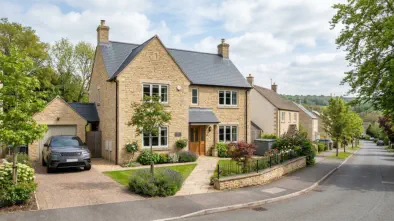
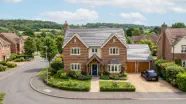
Here's a breakdown of common historical building materials and their regional prevalence: 1. Stone Stone is arguably the most iconic traditional building material in many parts of the UK, with its type and colour varying dramatically by geological region. Limestone: • Cotswolds (South West England): Famous for its warm, honey-coloured Oolitic limestone. This stone is relatively soft and easy to cut when first quarried, hardening upon exposure. This allows for fine ashlar (finely cut and dressed stone) work on grander buildings and roughly dressed blocks for cottages. Examples include villages like Bibury, Bourton-on-the-Water, and Stow-on-the-Wold. • Dorset (South West England): Known for Portland stone, a high-quality white-grey limestone, often used for significant public buildings and grand houses across the UK, not just locally. • Yorkshire (North England): Certain areas utilise limestone, contributing to lighter-coloured buildings. • Peak District (Central England): Gritstone and limestone are both prevalent, leading to a mix of dark and lighter stone buildings. • Wales: Carboniferous Limestone was used in many castles (e.g., Chepstow, Pembroke) and other structures. • Pembrokeshire (Wales): Local limestone from areas like Carew was shipped around the coast for building and lime production. Sandstone: • Scotland (especially Central Belt, Borders, and parts of the North East): Sandstone is a dominant material, ranging from deep reds (e.g., Glasgow's Red Sandstone) to cream and pale pinks (e.g., Moray). It can be fine-grained and suitable for carving or coarser. Cities like Edinburgh and Glasgow are defined by their sandstone architecture. • Yorkshire (North England): Many traditional buildings, particularly in West Yorkshire, are constructed from various types of sandstone, often appearing grey, brown, or golden. • Northumberland (North East England): Characterised by grey and pink sandstones. • Welsh Marches & South Wales: Old Red Sandstone gives a distinctive chestnut brown or occasionally green hue to towns like Brecon and Abergavenny. Pennant Sandstone is widespread around the South Wales Coalfield, used for terraced housing and larger edifices. Granite: • Aberdeen (Scotland): Famous as "The Granite City" due to the widespread use of local grey granite, which gives the city a distinctive, sparkling appearance. • Cornwall (South West England): Grey granite is a prominent building material, especially in coastal towns and inland moorland areas. It's a very hard material, often resulting in less ornate, robust structures. Flint: • East Anglia (e.g., Norfolk, Suffolk) and Chalk Seams (e.g., Kent, Sussex, Hampshire): Flint is abundant in areas with chalk geology. It's extremely hard and weather-resistant. It's rarely used on its own but typically combined with brick (for quoins and window dressings) or other materials. Knapped flint (shaped to create a flat, smooth surface) is a sign of more expensive construction. Chalk Block & Cob: • Chalk Downlands (e.g., Wiltshire, Oxfordshire, Hampshire): Harder bands of chalk were quarried and used as building blocks, often protected by good foundations (stone or brick) and overhanging roofs ("good shoes and a hat"). • South West England (especially Devon and Cornwall) & parts of Wales: Cob (a mix of clay, sand, straw, and water) was a very common material for wall construction. These buildings typically have thick, rounded walls, often rendered with lime wash and topped with thatch, creating a characteristic "tea cosy" look. In Wales, a similar material is known as 'clom'. 2. Brick As timber resources became scarcer and brick-making technology improved, brick became a dominant material, particularly from the 16th century onwards. Brick colours vary significantly based on the local clay used. • South East England (e.g., London, Essex, Kent): Known for warm, soft red handmade bricks (often Tudor or Georgian). "Stock bricks" (yellowish-grey) were also very common, especially in London. Mathematical tiles were sometimes applied to timber-framed buildings to mimic the appearance of brick, particularly in Kent and Sussex. • Midlands & North West England: Red brick is very common, often with regional variations in hue and texture. The "black and white" timber-framed houses of Worcestershire, Herefordshire, and Shropshire often have decorative brick infill panels. • Northern Ireland: Most local bricks are bright red, a product of local clays, with some burnt purply-red variations. Imported yellow stock bricks were used for decorative elements like quoins and chimneys. 3. Timber Timber was historically a primary building material, especially before the widespread adoption of brick and stone. • Timber-Framed Buildings (e.g., West Midlands - Worcestershire, Herefordshire, Shropshire; South East - Kent, Sussex, Essex): These regions are famous for their "black and white" half-timbered houses, where a wooden frame is in-filled with materials like wattle and daub, or later, brick. The exposed timber was often tarred or painted black, and the infill whitewashed. • Weatherboarding (South East England, particularly Kent and Essex): Softwood or oak boards, often feather-edged, applied horizontally to timber-framed buildings as external cladding. Historically often tarred black, but also painted white or off-white. 4. Roofing Materials Roofing materials also show strong regional patterns: Slate: • Wales (especially North Wales - Snowdonia): Welsh slate became incredibly popular from the 19th century onwards due to the industrial scale of quarrying and improved transportation (railways). Its durability and consistent quality led to its widespread use across the UK. • Cumbria (North West England): Local grey-green slate (e.g., Burlington slate) is characteristic of the Lake District. • Cornwall & Devon: Local slates were also used. • Scotland: Slate is a very common roofing material. • Northern Ireland: Natural slate is one of the main roof coverings for historic buildings. Thatch: • Rural areas across England (e.g., Norfolk, Suffolk, Devon, Dorset, Oxfordshire) & parts of Wales and Northern Ireland: Thatch (straw, reed, or heather) was a very common roofing material, especially for cottages and agricultural buildings, due to its availability and insulating properties. The style of thatching (e.g., long straw, combed wheat reed, water reed) varies regionally. Clay Tiles: • South East England (e.g., Kent, Sussex, Essex): Handmade plain clay tiles (flat, overlapping tiles) and pantiles (S-shaped tiles, common in East Anglia due to Dutch influence) create characteristic undulating roofscapes. The colour ranges from reds to browns. • West Country (e.g., Somerset): Clay tiles are also prevalent. Stone Tiles (Stone Slates): • Cotswolds, Yorkshire Dales, parts of Cumbria: Areas with suitable layered stone produced thick, heavy stone roof tiles, often laid in diminishing courses (larger at the eaves, smaller at the ridge). 5. Other Materials and Finishes • Lime Mortar & Renders: Historically, lime-based mortars and renders were used universally as they allow buildings to "breathe," accommodating movement and moisture. Many stone and earth walls were (and should be) finished with lime wash or lime render. • Wattle and Daub: Used as infill panels for timber-framed buildings, made from woven hazel branches (wattle) coated with a mixture of clay, straw, sand, and animal dung (daub). Pargeting: A decorative form of external plasterwork, often seen on timber-framed buildings in East Anglia, where patterns are raised or incised into the wet lime plaster.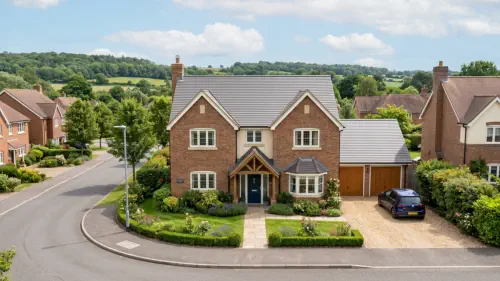
Building Materials
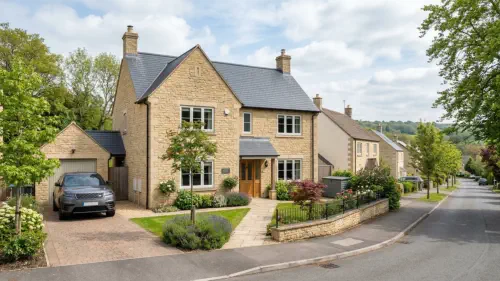
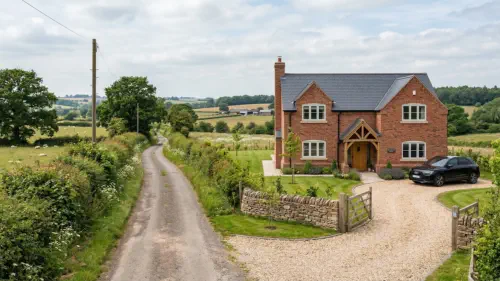
Here's a breakdown of common historical building materials and their regional prevalence: 1. Stone Stone is arguably the most iconic traditional building material in many parts of the UK, with its type and colour varying dramatically by geological region. Limestone: • Cotswolds (South West England): Famous for its warm, honey-coloured Oolitic limestone. This stone is relatively soft and easy to cut when first quarried, hardening upon exposure. This allows for fine ashlar (finely cut and dressed stone) work on grander buildings and roughly dressed blocks for cottages. Examples include villages like Bibury, Bourton-on-the-Water, and Stow-on-the-Wold. • Dorset (South West England): Known for Portland stone, a high-quality white-grey limestone, often used for significant public buildings and grand houses across the UK, not just locally. • Yorkshire (North England): Certain areas utilise limestone, contributing to lighter-coloured buildings. • Peak District (Central England): Gritstone and limestone are both prevalent, leading to a mix of dark and lighter stone buildings. • Wales: Carboniferous Limestone was used in many castles (e.g., Chepstow, Pembroke) and other structures. • Pembrokeshire (Wales): Local limestone from areas like Carew was shipped around the coast for building and lime production. Sandstone: • Scotland (especially Central Belt, Borders, and parts of the North East): Sandstone is a dominant material, ranging from deep reds (e.g., Glasgow's Red Sandstone) to cream and pale pinks (e.g., Moray). It can be fine-grained and suitable for carving or coarser. Cities like Edinburgh and Glasgow are defined by their sandstone architecture. • Yorkshire (North England): Many traditional buildings, particularly in West Yorkshire, are constructed from various types of sandstone, often appearing grey, brown, or golden. • Northumberland (North East England): Characterised by grey and pink sandstones. • Welsh Marches & South Wales: Old Red Sandstone gives a distinctive chestnut brown or occasionally green hue to towns like Brecon and Abergavenny. Pennant Sandstone is widespread around the South Wales Coalfield, used for terraced housing and larger edifices. Granite: • Aberdeen (Scotland): Famous as "The Granite City" due to the widespread use of local grey granite, which gives the city a distinctive, sparkling appearance. • Cornwall (South West England): Grey granite is a prominent building material, especially in coastal towns and inland moorland areas. It's a very hard material, often resulting in less ornate, robust structures. Flint: • East Anglia (e.g., Norfolk, Suffolk) and Chalk Seams (e.g., Kent, Sussex, Hampshire): Flint is abundant in areas with chalk geology. It's extremely hard and weather-resistant. It's rarely used on its own but typically combined with brick (for quoins and window dressings) or other materials. Knapped flint (shaped to create a flat, smooth surface) is a sign of more expensive construction. Chalk Block & Cob: • Chalk Downlands (e.g., Wiltshire, Oxfordshire, Hampshire): Harder bands of chalk were quarried and used as building blocks, often protected by good foundations (stone or brick) and overhanging roofs ("good shoes and a hat"). • South West England (especially Devon and Cornwall) & parts of Wales: Cob (a mix of clay, sand, straw, and water) was a very common material for wall construction. These buildings typically have thick, rounded walls, often rendered with lime wash and topped with thatch, creating a characteristic "tea cosy" look. In Wales, a similar material is known as 'clom'. 2. Brick As timber resources became scarcer and brick-making technology improved, brick became a dominant material, particularly from the 16th century onwards. Brick colours vary significantly based on the local clay used. • South East England (e.g., London, Essex, Kent): Known for warm, soft red handmade bricks (often Tudor or Georgian). "Stock bricks" (yellowish-grey) were also very common, especially in London. Mathematical tiles were sometimes applied to timber-framed buildings to mimic the appearance of brick, particularly in Kent and Sussex. • Midlands & North West England: Red brick is very common, often with regional variations in hue and texture. The "black and white" timber-framed houses of Worcestershire, Herefordshire, and Shropshire often have decorative brick infill panels. • Northern Ireland: Most local bricks are bright red, a product of local clays, with some burnt purply-red variations. Imported yellow stock bricks were used for decorative elements like quoins and chimneys. 3. Timber Timber was historically a primary building material, especially before the widespread adoption of brick and stone. • Timber-Framed Buildings (e.g., West Midlands - Worcestershire, Herefordshire, Shropshire; South East - Kent, Sussex, Essex): These regions are famous for their "black and white" half-timbered houses, where a wooden frame is in- filled with materials like wattle and daub, or later, brick. The exposed timber was often tarred or painted black, and the infill whitewashed. • Weatherboarding (South East England, particularly Kent and Essex): Softwood or oak boards, often feather-edged, applied horizontally to timber-framed buildings as external cladding. Historically often tarred black, but also painted white or off-white. 4. Roofing Materials Roofing materials also show strong regional patterns: Slate: • Wales (especially North Wales - Snowdonia): Welsh slate became incredibly popular from the 19th century onwards due to the industrial scale of quarrying and improved transportation (railways). Its durability and consistent quality led to its widespread use across the UK. • Cumbria (North West England): Local grey-green slate (e.g., Burlington slate) is characteristic of the Lake District. • Cornwall & Devon: Local slates were also used. • Scotland: Slate is a very common roofing material. • Northern Ireland: Natural slate is one of the main roof coverings for historic buildings. Thatch: • Rural areas across England (e.g., Norfolk, Suffolk, Devon, Dorset, Oxfordshire) & parts of Wales and Northern Ireland: Thatch (straw, reed, or heather) was a very common roofing material, especially for cottages and agricultural buildings, due to its availability and insulating properties. The style of thatching (e.g., long straw, combed wheat reed, water reed) varies regionally. Clay Tiles: • South East England (e.g., Kent, Sussex, Essex): Handmade plain clay tiles (flat, overlapping tiles) and pantiles (S-shaped tiles, common in East Anglia due to Dutch influence) create characteristic undulating roofscapes. The colour ranges from reds to browns. • West Country (e.g., Somerset): Clay tiles are also prevalent. Stone Tiles (Stone Slates): • Cotswolds, Yorkshire Dales, parts of Cumbria: Areas with suitable layered stone produced thick, heavy stone roof tiles, often laid in diminishing courses (larger at the eaves, smaller at the ridge). 5. Other Materials and Finishes • Lime Mortar & Renders: Historically, lime-based mortars and renders were used universally as they allow buildings to "breathe," accommodating movement and moisture. Many stone and earth walls were (and should be) finished with lime wash or lime render. • Wattle and Daub: Used as infill panels for timber-framed buildings, made from woven hazel branches (wattle) coated with a mixture of clay, straw, sand, and animal dung (daub). Pargeting: A decorative form of external plasterwork, often seen on timber-framed buildings in East Anglia, where patterns are raised or incised into the wet lime plaster.
PlansforPlanning


PlansforPlanning